Panel Upgrades
When to Upgrade Your Electrical Panel: A Complete Guide
Electrical Services for Durham
Region Home
Author: Paul Halvorson
March 20, 2026
Reading Time: 6 minutes
March 20, 2026
Author: Paul Halvorson
Reading Time: 6 minutes
Panel Upgrades
When to Upgrade Your Electrical Panel: A Complete Guide for Durham Region Homeowners
Electrical Services for Durham
Region Home
Author: Paul Halvorson
March 12, 2026
Reading Time: 8 minutes
March 20, 2026
Author: Paul Halvorson
Reading Time: 6 minutes
You’re right in the middle of preparing dinner. The oven is preheating, the dishwasher is humming, and you decide to quickly warm up some coffee in the microwave. Suddenly—click. The kitchen goes dark, and the steady hum of your home falls silent. You make the all-too-familiar trip to the basement to flip a breaker back on.
The Problem: Most homeowners view a tripped breaker as a minor nuisance. In reality, it is a desperate cry for help from your home’s electrical system. Your electrical panel is the "heart" of your house, and many hearts in Durham Region are struggling to keep up with the demands of 2026.
The Agitation:
If your panel was installed in the 1970s, 80s, or even the early 90s, it simply wasn't designed for a life filled with high-speed internet routers, air fryers, hot tubs, and electric vehicles. When you ignore the warning signs, you aren't just risking a power outage; you are risking an electrical fire. Heat builds up behind your walls, degrading insulation and putting your family’s safety at risk.
The Solution: In this guide, I’m providing a straightforward look at how to tell if your panel is failing, what the upgrade process looks like in Ontario, and how to finally get the peace of mind you deserve.
1. What is an Electrical Panel?
Think of your electrical panel as the "central brain" of your home's power. It takes the high-voltage electricity provided by your local utility (like Oshawa Power, Elexicon, or Hydro One) and distributes it into smaller, manageable circuits for your lights, outlets, and appliances.
Breakers vs. Fuses
Older homes in Port Perry and Oshawa may still utilize fuse boxes. While fuses were effective for the power needs of the 1950s, they are now obsolete. Modern circuit breakers are safer because they can be reset rather than replaced, and they are much more sensitive to dangerous surges.
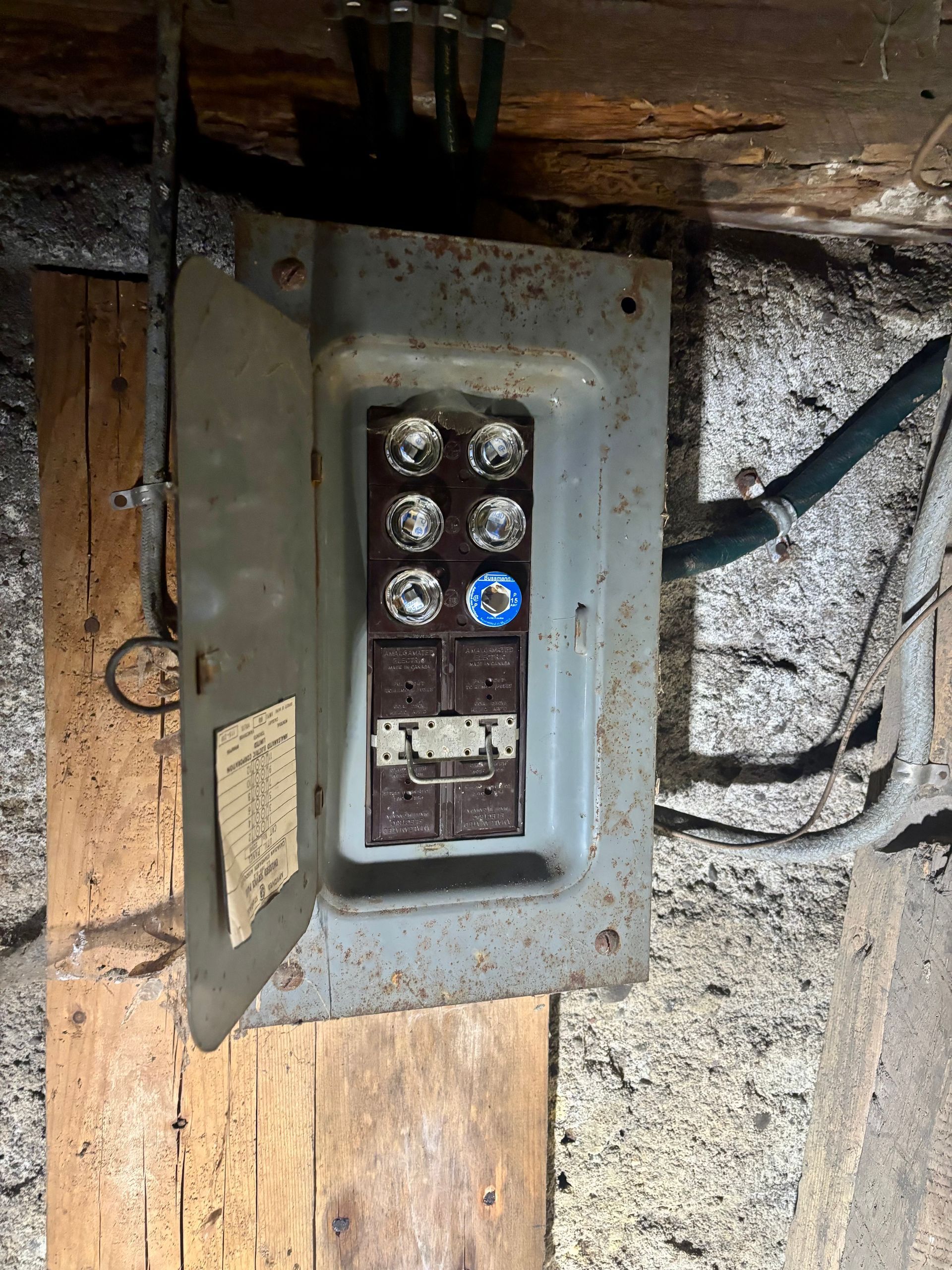
Old Fuse Panel
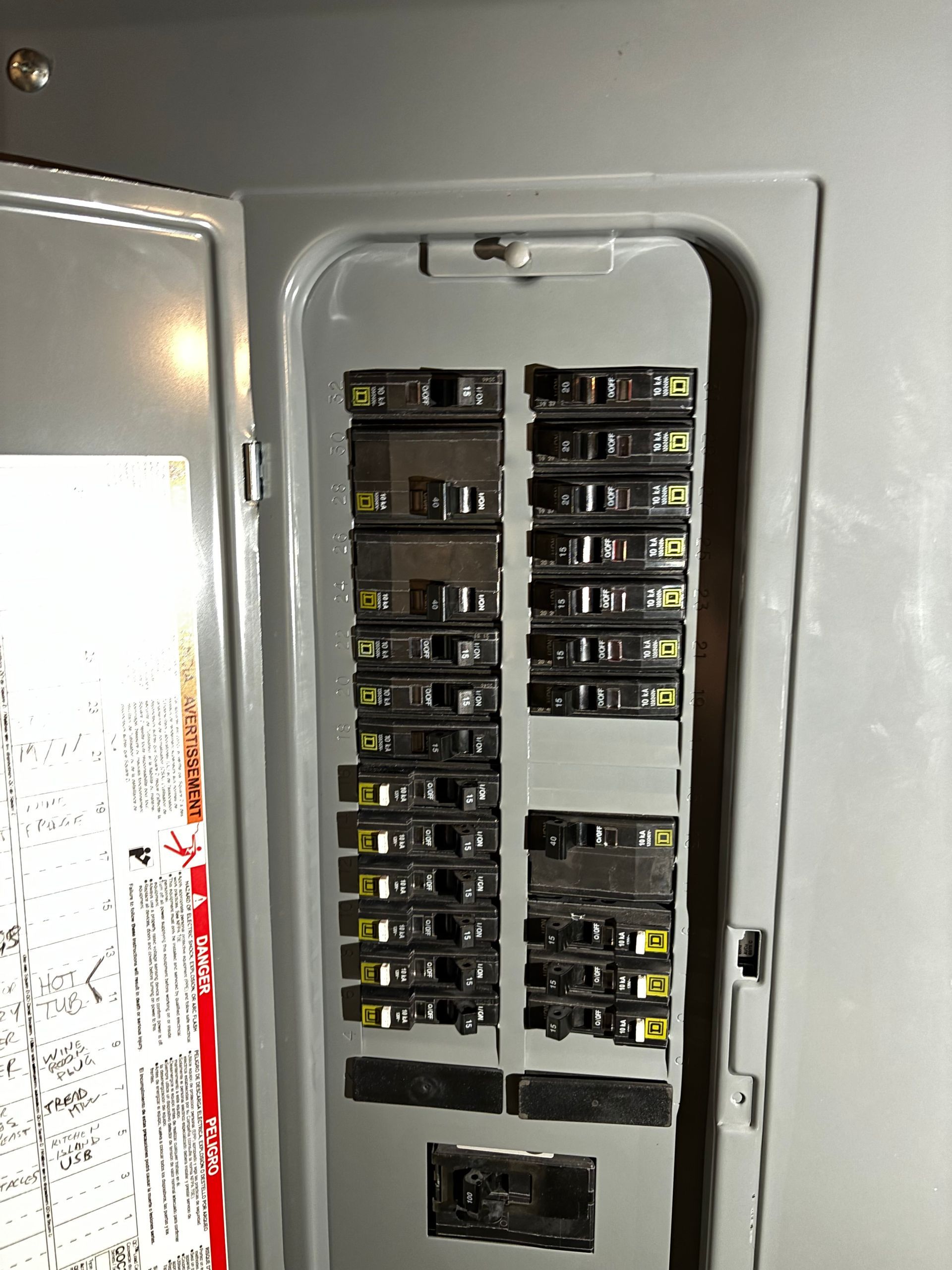
Modern Breaker Panel
Example of a fuse-based connection vs modern breaker panel setup
Still have a fuse panel like this? It may be time to upgrade.
2. 8 Warning Signs You Need an Upgrade
Your electrical panel shouldn't be a "mystery box." If you notice any of the following, your system is likely overloaded.
- Flickering Lights: Does the living room dim when the AC or dryer kicks in?
- Frequent Breaker Trips: Resetting breakers more than once a month is a capacity problem.
- The "Hot" Test: If the door of your panel feels warm to the touch, call me immediately.
- Visible Corrosion:
Rust or white powdery residue indicates moisture—a major safety hazard.
Key Points:
- Crackling Sounds: You should never hear your electricity. Buzzing is a sign of a loose connection.
- Burning Smells: An "electric" or ozone smell near the panel is an emergency.
- Fuses instead of Breakers: Most insurance companies in Ontario now require a switch to breakers for coverage.
- Discolored Outlets: Scorched wall outlets mean the panel isn't managing the circuit load correctly.
3. Types of Panel Upgrades
Not every home needs the same solution. My goal is to provide a straightforward recommendation based on your lifestyle.
Top Warning Signs You Need an Upgrade
- Frequent Breaker Trips: Resetting breakers often means your system is at capacity.
- Flickering Lights: Do lights dim when the AC or dryer turns on?
- Burning Smells or Heat: An "ozone" smell or a panel that feels hot is an emergency.
- Fuses Instead of Breakers: Outdated fuse boxes often void modern home insurance policies.
Choosing Your Capacity
| Service Level | Best For | 2026 Market Status |
|---|---|---|
| 100-Amp | Small bungalows, gas heating, no EVs. | Becoming obsolete for modern families. |
| 200-Amp | Families, EVs, AC, and hot tubs. | The Gold Standard for Durham Region. |
| 400-Amp | Large estates or multiple EV chargers. | For high-demand luxury properties. |
"In 30 years, I've seen hundreds of DIY panel 'fixes.' Electricity doesn't forgive mistakes. An upgrade isn't just about more power; it's about the safety of the people living under your roof."
— Paul Halvorson
4. The 2026 Pricing & Process Guide
I don't believe in "surprises." Here is what you can expect when upgrading your home in Durham Region this year.
What Does it Cost?
As of March 2026, a standard 200-amp panel upgrade in Ontario typically ranges from $2,500 to $4,500. This range includes the breaker panel, labor, and the mandatory ESA permit fees.
Factors that influence the final price:
- Meter Base Replacement: If your outdoor meter box is outdated, add $300–$700.
- Service Entrance Cable: If we need to run new heavy-duty wire from the utility line, add $400–$900.
- Hydro Reconnection: Utility fees for the temporary shutoff usually run $150–$300.
Frequently Asked Questions
How long will my power be off?
Expect a power outage of 4 to 8 hours. I coordinate the timing with the utility company to minimize disruption.
Is a permit really necessary?
Yes. In Ontario, any panel change requires an Electrical Safety Authority (ESA) permit. Without it, your home insurance may be voided in the event of a fire.
Why should I choose a local owner-operator over a big franchise?
With PCH, you get my 30 years of experience on every wire. Big franchises send "rotating crews" of junior techs. I handle your job personally for total peace of mind.
Conclusion
Summary
Your home’s electrical system shouldn't be a source of anxiety. If you are tired of flickering lights or the stress of a tripped breaker, it’s time to modernize. A 200-amp panel is the single best investment you can make to increase your home’s value and ensure it is ready for the future of EV charging and smart home tech.
Key Takeaways:
- Breaker trips are a warning sign of an overloaded, aging system.
- A 200-amp upgrade is the modern standard for safety and capacity.
- Always ensure your electrician handles the ESA permits for your peace of mind.
Last Updated: March 25, 2026
It usually happens at the worst possible time. You're running the AC on a hot July afternoon, you turn on the microwave, and suddenly—darkness. The breaker trips. If this is a regular occurrence in your Durham Region home, your electrical panel might be trying to tell you something.
If your home was built before 1990, your electrical panel may simply not be equipped to handle modern power demands. In this complete guide, we'll walk you through the warning signs, the upgrade process, and exactly what to expect when you upgrade to a 200-amp service.
What is an Electrical Panel?
Think of your electrical panel as the heart of your home's electrical system. It receives power from the utility company and distributes it through various circuits to your outlets, appliances, and lights. When a circuit draws more power than it's designed to handle, the breaker flips to prevent overheating and potential fires.
Common Panel Types in Durham Region
- Fuse Boxes:
Commonly found in homes built before 1960. They use replaceable fuses instead of switches.
- 100-Amp Panels:
The standard for homes built between 1970 and 1990. Barely sufficient for today's electronics.
- 200-Amp Panels:
The modern standard. Essential if you want to add an EV charger, hot tub, or secondary suite.
Signs You Need an Upgrade
Not sure if your panel is due for a replacement? Your home will usually give you a few hints. Here are the most common warning signs we see in Oshawa, Pickering, and Whitby homes:
Sign #1
Tripping
Breakers trip frequently when multiple appliances run.
Sign #2
Flickering
Lights dim or flicker when the AC or fridge kicks on.
Sign #3
Age
Your panel is a Federal Pacific or is over 25 years old.
The Upgrade Process
Upgrading a panel is not a DIY job. It requires coordination with the local utility (like Elexicon Energy), pulling the proper ESA (Electrical Safety Authority) permits, and careful installation by a licensed electrician.
"A panel upgrade is an investment in your home's safety and future capabilities. Doing it right means you won't have to worry about your electrical system for the next 30 years."
— Paul Halvorson, Master Electrician
Frequently Asked Questions
How much does a panel upgrade cost in Durham Region?
Upgrading from a 100-amp to a 200-amp panel typically ranges from $2,500 to $3,500, depending on the complexity of the job, the location of the panel, and whether the utility line coming to the house needs to be updated.
How long will my power be out during the upgrade?
Most panel upgrades take one full day to complete. Your power will typically be shut off in the morning and restored by late afternoon.
Do I need a 200-amp panel for an EV charger?
In most cases, yes. A Level 2 EV charger draws a significant amount of power. If you have an older 100-amp panel, adding an EV charger will likely overload your system.
How much does a panel upgrade cost in Durham Region?
Upgrading from a 100-amp to a 200-amp panel typically ranges from $2,500 to $3,500, depending on the complexity of the job, the location of the panel, and whether the utility line coming to the house needs to be updated.
How long will my power be out during the upgrade?
Most panel upgrades take one full day to complete. Your power will typically be shut off in the morning and restored by late afternoon.
Do I need a 200-amp panel for an EV charger?
In most cases, yes. A Level 2 EV charger draws a significant amount of power. If you have an older 100-amp panel, adding an EV charger will likely overload your system.
Conclusion
Upgrading your electrical panel brings peace of mind, improves your home's safety, and prepares your property for the future of electrification. If you are experiencing frequent breaker trips or planning a major renovation, it's time to have a professional evaluate your system.
Key Takeaways:
- Older 100-amp panels struggle with modern electrical demands.
- Frequent tripping, flickering lights, and reliance on power strips are major red flags.
- Upgrading to 200-amps is highly recommended before installing an EV charger or hot tub.
- Always hire a licensed Master Electrician and ensure ESA permits are pulled.
About Paul Halvorson
Paul Halvorson is the owner of PCH Electrical Contractors, serving Durham Region for over 30 years. Paul specializes in panel upgrades, EV charger installation, generators, and smart home integration. When he's not helping homeowners with their electrical needs, you can find him enjoying the outdoors in Port Perry.
Related Reading
EV Charger Installation in Durham Region: Complete Guide
Backup Generator Buying Guide for Ontario Homeowners: Total Peace of Mind
When to Upgrade Your Electrical Panel: A Complete Guide for Durham Region Homeowners
Need Help With a Panel Upgrade?
Call Paul directly for a free quote on your electrical project. Serving all of Durham Region.